

Updated on 10 September 2026. The article now clarifies the difference between SSL and modern TLS, updates the description of browser security indicators and the TLS 1.3 mechanism, and corrects the information about DV, OV, EV, Wildcard and SAN certificates. It also includes the current 200-day maximum validity period for publicly trusted TLS certificates, recommendations for automated renewal, accurate explanations of the effect of HTTPS on SEO, GDPR and PCI DSS requirements, and the limits of protection against phishing and cyberattacks.
As most websites have moved to HTTPS, the question “What is SSL?” has become fundamental for every website owner. If a website operates only over unencrypted HTTP, data exchanged between the browser and the server can potentially be read or modified by someone capable of intercepting network traffic. Passwords, email addresses, form data, session identifiers and other confidential information may be exposed.
Once a certificate has been configured correctly, the connection is established over HTTPS and the traffic is protected by TLS. However, it is important to understand what this protection actually means. HTTPS confirms that the browser has established an encrypted channel with the server for the specified domain, but it does not by itself guarantee that the website owner is trustworthy, that the website contains no malicious code or that a purchase is safe. This is why browsers have gradually stopped using a padlock as a symbol of a “trusted website”. Starting with Chrome 117, for example, Google replaced the padlock with a neutral site controls icon because users frequently misinterpreted the padlock as proof of absolute trustworthiness. The change is explained in an official Chromium team announcement.
For online shops, enquiry forms, customer accounts, APIs and online payments, a TLS certificate is an essential part of normal website operation. It protects data while it is being transmitted, helps prevent browser warnings and provides the technical foundation required by modern web protocols. At the same time, it must be combined with software updates, access control, backups, monitoring and proper protection of the server itself.
What Is an SSL Certificate?
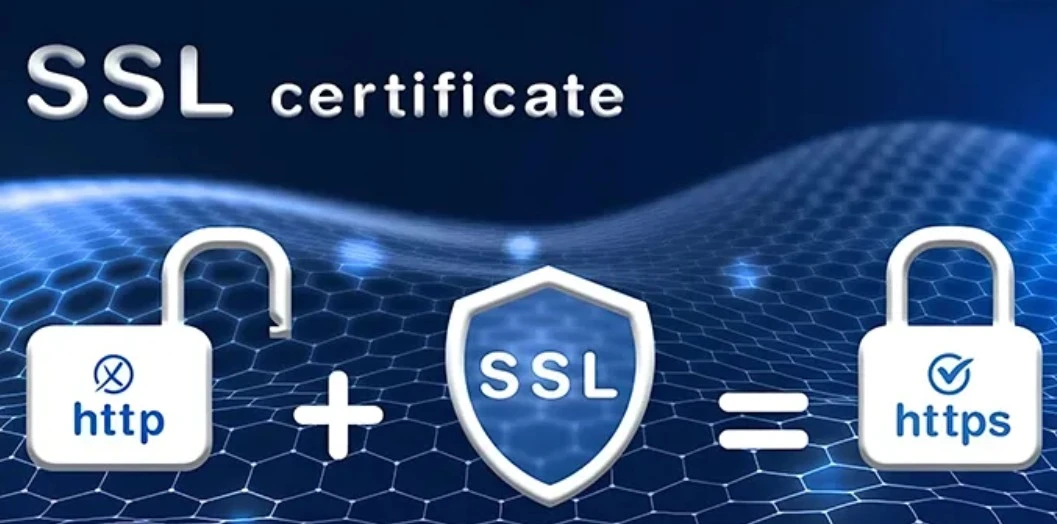
An SSL certificate is the commonly used name for a digital certificate that a server presents to a browser when establishing a secure HTTPS connection. The certificate links a domain name to a public cryptographic key and contains information about the issuer, the owner or domain, the validity period and the permitted uses of the key. The private key is not included in the certificate and must remain protected on the server or in a specialised key management system.
The term SSL has been retained for historical reasons, but the Secure Sockets Layer protocol itself is obsolete and should no longer be used. Modern HTTPS operates on the basis of TLS, or Transport Layer Security. It is therefore technically more accurate to use the term “TLS certificate”, although “SSL certificate” and “SSL/TLS certificate” remain widely understood and commonly used.
When a connection is established, the browser verifies whether the certificate was signed by a trusted certificate authority, whether it matches the requested domain, whether its validity period has expired and whether the server supplies the correct intermediate certificates. Once these checks have been completed successfully, the parties agree on cryptographic parameters and create session keys. These keys provide confidentiality and integrity for the data exchanged within the connection.
A certificate does not store or transmit users’ passwords, nor does it encrypt files stored on a disk. Its purpose is to help authenticate the server and securely establish a communication channel. If the information is subsequently stored in an unprotected database, processed by a vulnerable application or forwarded through an unencrypted internal connection, the TLS certificate does not eliminate those risks.
Types of SSL Certificates
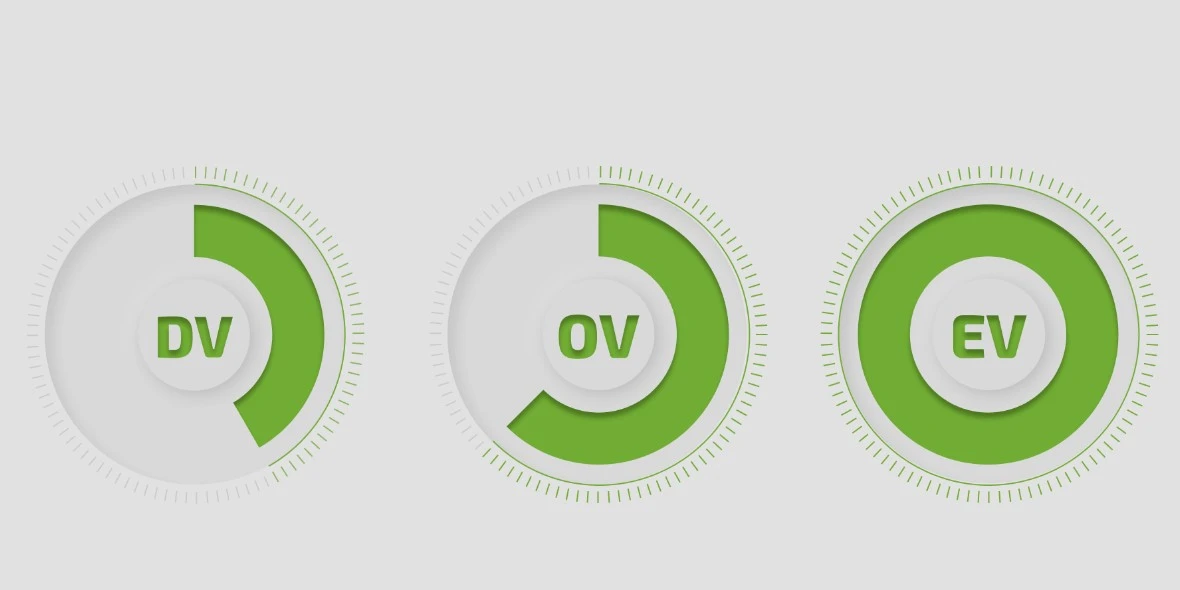
Certificates differ in how the applicant is validated and in the set of domain names they protect. The strength of encryption does not automatically increase simply because a certificate uses a more expensive validation type. DV, OV and EV certificates can use the same modern cryptographic algorithms. The primary difference is the information that the certificate authority verifies before issuing the certificate.
- DV – Domain Validation. The certificate authority verifies that the applicant controls the domain, for example through a DNS record, a special file or an authorised email address. This is a fast option for blogs, company websites, landing pages and many online shops. DV provides encryption but does not verify the legal entity behind the website.
- OV – Organization Validation. In addition to control of the domain, the certificate authority verifies that the organisation exists and checks selected registration and contact details. OV is appropriate when a company needs verified information about its legal entity to be associated with the certificate. However, users usually need to open the certificate details to see this information.
- EV – Extended Validation. This type involves an extended review of the organisation under specific rules established by certificate authorities and the browser ecosystem. Modern browsers no longer highlight EV websites with a green address bar or display the organisation’s name prominently in the main address bar. EV should therefore be selected because enhanced identity verification is required, not because of an expected visual indicator.
- Single-domain certificate. This certificate protects a specific name listed in its fields, such as example.com. It is important to check whether www.example.com is also included. Technically, it is a separate hostname and must be added separately when protection for both versions is required.
- Multi-domain or SAN certificate. This type contains several different names in the Subject Alternative Name extension. A single certificate can cover separate domains and subdomains if the certificate authority’s product permits it. This approach can simplify administration, but renewal must be planned carefully because a problem with one shared certificate may affect several resources simultaneously.
- Wildcard certificate. A name such as *.example.com covers one level of subdomains, including blog.example.com and shop.example.com, but not a.blog.example.com. The apex domain example.com is not automatically covered by the wildcard pattern and must be included separately as a SAN. Wildcard certificates are convenient for dynamic subdomain structures, but compromise of the shared private key creates a risk for every service using that key.
For most small websites, an automated DV certificate is sufficient. OV and EV certificates do not make the encryption stronger, but they may be required by an internal policy, a contractual obligation or the need to verify the legal entity associated with the certificate. If a project uses many domains or subdomains, the choice between separate certificates, SAN and Wildcard should take into account not only cost, but also private key separation, automation and the consequences of a possible compromise.
How to Check Whether an SSL Certificate Is Valid
Before entering a password, payment details or other sensitive information, users should verify both the presence of HTTPS and the accuracy of the domain name. The address should begin with https://, although security interfaces vary between browsers. Chrome uses a site controls icon instead of the traditional padlock. Other browsers may retain a padlock or use another indicator. Selecting the icon opens information about connection security and the page’s permissions.
The certificate details can be used to check the domain, issuer and validity period. It is particularly important to read the address carefully. A certificate may be completely valid but issued for a similar fraudulent domain. An extra letter, a hyphen or a different top-level domain may indicate a phishing copy. HTTPS confirms that the browser has a protected connection to the domain currently open. It does not prove that the domain belongs to the brand the user expected to visit.
A browser displays a blocking warning if the certificate has expired, is not yet valid, does not match the hostname, has an untrusted certification chain or is affected by an incorrect server configuration. Such a warning should not be ignored when signing in or making a payment. Private certificate authorities may be used for internal corporate systems, but their root certificates must be securely installed in the device’s trusted certificate store by an authorised administrator.
Website owners should additionally examine the complete certification chain, supported TLS versions, cipher suites, redirects and the absence of mixed content. Mixed content occurs when an HTTPS page loads scripts, stylesheets, images or other resources over HTTP. Browsers may block active mixed content, while passive content may be automatically upgraded or marked as a potential risk.
Main Types and Methods of Data Encryption

TLS combines asymmetric cryptography, digital signatures, hash functions and fast symmetric encryption. Symmetric algorithms use an agreed secret key to protect the main flow of data. They operate efficiently and are suitable for large amounts of traffic. Asymmetric cryptography uses related public and private keys to help authenticate the server, verify a digital signature and establish shared secrets securely.
A common explanation states that the browser always generates a complete symmetric key, encrypts it with the RSA public key from the certificate and sends it to the server. This no longer describes a typical modern session. With TLS 1.3, the parties usually use an ephemeral ECDHE or DHE key exchange, independently calculate a shared secret and derive session keys from it. The server certificate and private key are used to authenticate the server and sign the handshake parameters. This mechanism supports forward secrecy: a future compromise of the long-term private key should not automatically reveal previously recorded sessions.
How a TLS Connection Is Established?
First, the browser sends the parameters it supports, including protocol versions, cryptographic groups, random data and key exchange material. The server selects compatible parameters and sends its own key exchange material, certificate and cryptographic proof that it controls the corresponding private key. The browser checks the domain, signature, validity period and chain of trust. Both parties then derive the same session keys and confirm that the handshake has not been altered.
Protected HTTP data exchange begins only after the handshake has been completed successfully. A detailed specification of the modern protocol is provided in RFC 8446, which defines TLS 1.3. The practical conclusion for website owners is straightforward: current TLS 1.2 and TLS 1.3 should be supported, obsolete SSL and early TLS versions should be disabled, secure configurations should be used and the settings should be reviewed regularly after server updates.
Encryption in transit is not the same as end-to-end encryption. Data is decrypted for processing at the web server, CDN, load balancer or another TLS termination point. If the request is then forwarded to an application or database, the internal connections must also be protected. Encryption at rest, proper key management and the principle of least privilege should be implemented separately.
HTTPS: Definition and Its Role in Website Security

HTTPS, or Hypertext Transfer Protocol Secure, is the operation of HTTP through a protected TLS connection. It provides three principal security properties: confidentiality of transmitted data, verification of its integrity and authentication of the server for the domain specified in the certificate. This protects traffic against passive eavesdropping and undetected modification between the client and the TLS termination point.
HTTPS must be used across the entire website, not only on login or payment pages. An unsecured HTTP page can be modified before the user reaches a protected section. Permanent redirects from HTTP to HTTPS reduce the risk of accidentally using the unencrypted protocol. Once the configuration has been thoroughly tested, the HSTS header can instruct browsers to access the domain only through HTTPS in the future.
HTTPS is also a prerequisite for many modern web platform capabilities and newer transport protocols. However, the https:// prefix does not verify the truthfulness of the content, the quality of a product or the intentions of the website administrator. A phishing website can obtain a DV certificate for a domain controlled by an attacker. Users must therefore continue to check the spelling of the address, the source of the link and the seller’s reputation.
Why Your Website Needs an SSL Certificate?
A TLS certificate is not merely an item to be marked as complete on a technical checklist. It is part of a website’s trusted infrastructure, protects data in transit and enables the browser to detect server impersonation or a loss of traffic integrity. Without HTTPS, users may see a “Not secure” warning and certain browser capabilities may operate with restrictions.
A correct migration to HTTPS includes the certificate, server configuration, redirects, internal URLs, canonical links, the sitemap, external integrations, cookies and security policies. Simply installing a certificate without updating the rest of the configuration can cause redirect loops, duplicate pages, mixed content or API failures.
How TLS Protects Users’ Personal Data?
With ordinary HTTP, data is transmitted without transport encryption. Passwords, email addresses, names, delivery addresses, form contents and session cookies may be exposed. TLS creates a protected channel: information is encrypted before transmission and checked for integrity when received. An intermediary on a public Wi-Fi network or another part of the route should not be able to read or silently alter the traffic.
Confidentiality means that the content of the exchange is unavailable to an external observer without the session keys. Integrity makes it possible to detect modified messages. Server authentication helps the browser confirm that the certificate matches the requested domain and leads to a trusted root certificate. Together, these properties substantially reduce the risk of data being intercepted or modified during transmission.
Once the information reaches the server, however, it must be protected by other controls. TLS does not correct excessive data collection, access control errors, application vulnerabilities or database leaks. Personal information security must therefore also include data minimisation, access management, logging, timely updates, backups and an incident response plan.
The Effect of SSL on Website Trust and Reputation

A browser warning about an insecure or invalid connection sharply reduces a visitor’s willingness to submit contact details, sign in to an account or pay for an order. For a business, this can result in lost enquiries and reputational damage. A correctly functioning HTTPS connection is now perceived not as a competitive advantage, but as a minimum standard of technical quality.
At the same time, a browser icon should not be described as proof that a company is trustworthy. The Chromium team explicitly notes that almost all phishing websites also use HTTPS. Trust in a brand is formed by a combination of factors: the correct web address, transparent contact details, understandable terms, reputation, secure payment processes, account protection and an appropriate response to incidents. TLS provides an essential foundation but does not replace these elements.
SSL and Compliance with Legal and Regulatory Requirements

For projects that process personal or payment data, transport encryption is an important part of compliance, but a certificate alone does not automatically make the entire system compliant. Article 32 of the GDPR requires appropriate technical and organisational measures based on risk and specifically identifies encryption as one of the possible measures. The regulation does not establish a universal instruction to “install SSL”, but transmitting personal data without encryption over open networks would generally be difficult to justify as appropriate protection.
PCI DSS applies to payment card environments. The current version of the standard, PCI DSS 4.0.1, requires payment card data to be protected during transmission over open public networks by strong cryptography and secure protocols. The precise scope of the requirements depends on the architecture, the method used to accept payments and the assessed environment. Official documents are available from the PCI Security Standards Council document library.
TLS protects the communication channel, but compliance may also require access policies, multi-factor authentication, vulnerability management, logs, segmentation, defined data retention periods and a lawful basis for processing. Owners of resources operating in several jurisdictions or handling sensitive categories of information should assess the applicable requirements with information security and legal professionals.
How an SSL Certificate Affects Search Rankings?
Google officially uses HTTPS as a ranking signal, but describes it as a lightweight signal. This means that a certificate alone will not move a page to the top of search results or compensate for weak content, technical errors or a lack of authority. The primary source is the Google Search Central publication HTTPS as a ranking signal.
It would be inaccurate to claim that bounce rate or session duration are directly used by Google as universal ranking factors. There is no official confirmation of such a simplified relationship. The practical SEO effect of HTTPS comes from the technical signal, the absence of browser warnings, the correct operation of modern features and the preservation of user trust.
During migration, each HTTP address should redirect with a 301 status to its corresponding HTTPS address. Canonical tags, hreflang attributes, the sitemap, internal links and page resources must also be updated. All old URLs should not be redirected solely to the homepage, as this can harm indexing and the user experience. After migration, the HTTPS version should be added to webmaster tools, crawl logs should be reviewed and any mixed content should be removed.
The Role of SSL in Protection Against Cyberattacks

TLS helps prevent traffic interception and man-in-the-middle attacks when the browser has correctly verified the certificate, the private key has not been compromised and the user has not ignored a security warning. The protocol also protects data integrity: an external party cannot silently replace payment details, a login form or a script within the encrypted stream without causing the cryptographic verification to fail.
However, TLS does not prevent phishing as a broader threat. An attacker can register a similar domain and obtain a legitimate DV certificate for it. The certificate confirms control of that fraudulent domain, not its connection to a recognised brand. TLS also does not protect against SQL injection, cross-site scripting, malicious plugins, password theft on an infected device, DDoS attacks or errors in application business logic.
Comprehensive protection requires a layered approach that includes timely updates, least-privilege access, multi-factor authentication, a web application firewall where appropriate, backups, monitoring, secure development practices and an incident response plan. TLS is responsible for the critical transport layer and should be configured at every point where sensitive data passes between systems.
Certificate Validity and Automated Renewal
As of 10 September 2026, new publicly trusted server TLS certificates issued on or after 15 March 2026 may have a validity period of no more than 200 days. This is a current requirement of the CA/Browser Forum Baseline Requirements. Further approved reductions will limit validity to 100 days from 15 March 2027 and 47 days from 15 March 2029.
Shorter validity periods make manual renewal increasingly impractical. A reliable configuration should automatically issue, install and verify a replacement certificate before the current one expires, reload the necessary services and notify the administrator if an error occurs. Even when a hosting provider offers automation, independent expiry monitoring is advisable because a failed DNS validation, changed access permissions or a configuration error may interrupt renewal.
Monitoring should cover not only the leaf certificate but also the complete chain, included domain names, correspondence with the private key and correct deployment across CDN nodes, load balancers and backup servers. After replacing a certificate, an automated external HTTPS test should be performed instead of relying solely on a message stating that issuance was successful.
How to Obtain an SSL Certificate?
Obtaining a certificate involves selecting the correct type, proving control of the domain, installing the certificate and moving the complete resource to HTTPS. For DV certificates, the process can often be automated by the hosting platform or an ACME client. OV and EV certificates additionally require information about the organisation and completion of the certificate authority’s validation process.
- Identify every required hostname. Record the primary domain, its www version, all necessary subdomains and any additional domains. This makes it possible to choose correctly between a single-domain, SAN or Wildcard certificate without leaving a separate service unprotected.
- Select the validation level and provider. A free, automated DV certificate is usually sufficient for basic encryption. OV or EV should be used when verified organisation details are required by an internal policy, audit or contractual obligation.
- Create the private key and CSR. This can be done on the server or through a hosting control panel. The private key must not be sent to the certificate authority or disclosed to third parties. The CSR contains the public key and application information.
- Prove control of the domain. The certificate authority may offer validation through a DNS record, an HTTP file or another permitted method. OV and EV certificates additionally require organisation validation in accordance with the rules of the selected product.
- Install the certificate and intermediate chain. The server must provide the correct certificate for each hostname together with the required intermediate certificates. After installation, verify the configuration externally instead of checking only the control panel.
- Move the website to HTTPS. Update the website address in the CMS, internal links, APIs, webhooks, canonical tags, hreflang attributes and the sitemap. Configure exact 301 redirects from HTTP and eliminate mixed content.
- Strengthen the configuration. Enable current TLS 1.2 and TLS 1.3, disable obsolete SSL and early TLS versions, configure secure cookies and consider HSTS after testing. HTTPS should also be checked on the CDN, load balancer and internal connections.
- Automate renewal and monitoring. Because the current maximum validity period is 200 days, relying on a calendar reminder is risky. Configure automated renewal, failure notifications and independent monitoring of certificate validity and website availability.
After deployment, test authentication, forms, payments, file uploads, integrations and redirects on different devices. If the website uses several servers, the new certificate must be deployed to each of them in time. Keeping a backup of the configuration is useful, but every copy of the private key must be protected to the same standard as the primary key.
Conclusion
SSL certificate is the familiar name for a modern TLS certificate that helps a browser authenticate a server and establish a secure HTTPS connection. It provides traffic confidentiality and integrity and protects against eavesdropping and undetected modification of data in transit. HTTPS is a fundamental requirement for every website, particularly those that use forms, customer accounts, APIs and payments.
At the same time, HTTPS is not proof that a website is completely safe. It does not fix application vulnerabilities, stop DDoS attacks, automatically encrypt a database or guarantee that the domain owner is not a fraudster. Users must still verify the address and context, while website owners must build several layers of security around TLS.
As of September 2026, automating the certificate lifecycle is particularly important. The maximum validity period for new publicly trusted certificates has already been reduced to 200 days and will continue to decrease. A sound strategy includes automated issuance and renewal, external monitoring, current TLS versions, a complete transition to HTTPS and regular configuration audits. This turns the certificate from a decorative browser indicator into a functional component of secure web infrastructure.