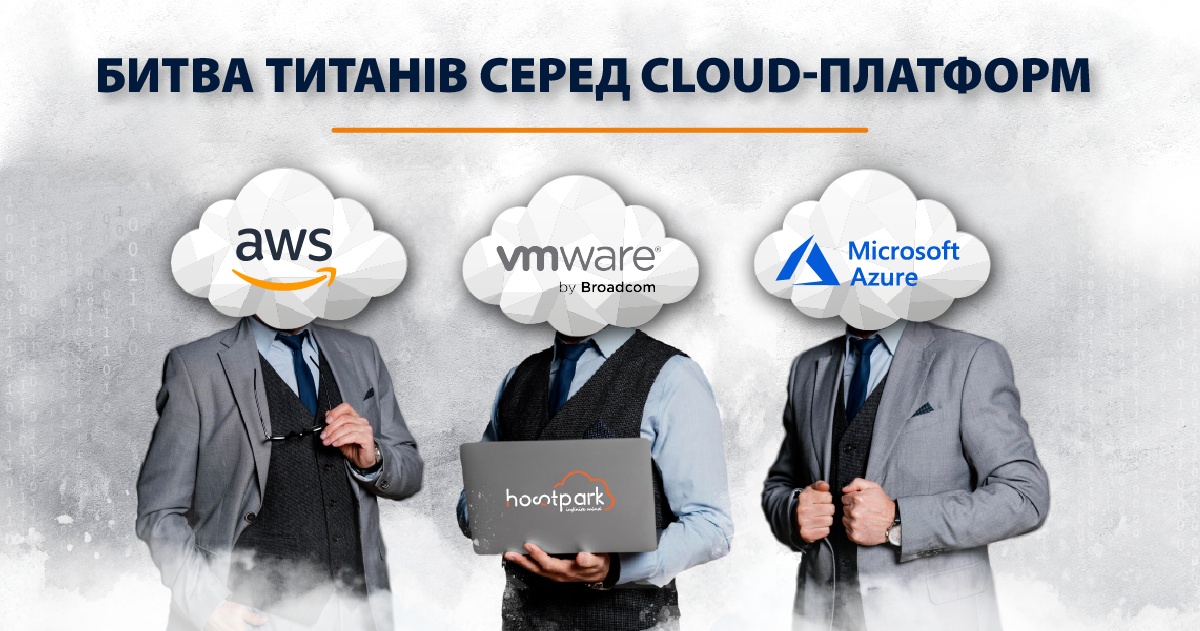
When choosing a platform for deploying a private or hybrid cloud, companies often face a dilemma: whether to select a well-established technology (such as VMware) or integrate solutions from global public providers (such as Microsoft Azure or AWS).
Choosing the right platform is critically important, as it determines the flexibility, scalability, and operational cost of your IT environment for years to come. Let’s take a closer look at three leaders shaping the modern cloud technology landscape.
VMware: the gold standard of enterprise virtualization
VMware, with its core platform vSphere, is not just a provider but a foundational technology on which most private data centers worldwide are built.
Key advantages:
- Maturity and reliability: VMware offers the most proven and reliable hypervisor. Its ecosystem (vCenter, vSAN, NSX) is comprehensive and deeply integrated.
- True hybrid capability: the VMware Cloud Foundation (VCF) solution ensures seamless workload migration between your data center and the cloud while maintaining the same management tools.
- Control: full administrative control and flexibility in hardware configuration, making it ideal for highly regulated industries.
Weaknesses:
- High licensing and maintenance costs.
- Requires highly skilled personnel for administration.
Best suited for: companies that already have their own infrastructure, value maximum control, or require highly available, mature solutions from certified local cloud providers.
Microsoft Azure: the power of integration and ecosystem
Microsoft Azure is a public cloud giant that offers on-premises deployment solutions through its Azure Stack product line.
Key advantages:
- Seamless integration: an ideal choice for companies already using Windows Server, Active Directory, and other Microsoft products. Management of on-premises and public resources is handled through a single console.
- Azure Stack: allows running Azure services directly in your data center, addressing data localization and latency requirements.
- PaaS and DevOps: instant access to a wide range of native PaaS services (databases, AI/ML, Serverless) that can accelerate development.
Weaknesses:
- Azure Stack requires certified hardware.
- Strong dependency on the Microsoft ecosystem.
Best suited for: large enterprises that have already invested in the Microsoft technology stack and want to leverage the public cloud while meeting data localization requirements (e.g., financial sector).
AWS (Amazon Web Services): cloud innovation in your data center
AWS, as a leader in the public cloud, extends its infrastructure to on-premises data centers through AWS Outposts and VMware Cloud on AWS.
Key advantages:
- AWS Outposts: racks with AWS hardware installed directly in your data center, enabling you to run native AWS services locally.
- Functional depth: access to the broadest catalog of innovative cloud services (Serverless, containers, Edge computing), constantly evolving.
- Hybrid via partnership: VMware Cloud on AWS allows companies already using VMware to seamlessly integrate with AWS.
Weaknesses:
- Complex and multi-layered pricing model.
- Requires learning a new infrastructure management approach different from traditional data centers.
Best suited for: companies focused on rapid development (DevOps) that want to leverage the maximum number of native AWS PaaS services but face latency or regulatory constraints.
Cloud Platform Comparison
| Characteristic | VMware (vSphere, VCF) | Microsoft Azure (Stack/Arc) | AWS (Outposts/VMC on AWS) |
| Maturity level | Highest (De facto standard) | High (Actively evolving) | High (Actively evolving) |
| Management tools | vCenter / vCloud Director | Azure Portal (single console) | AWS Management Console |
| Core ecosystem | Virtualization, Storage, Networking (vSAN, NSX) | Azure PaaS and IaaS services | Broadest PaaS and SaaS catalog |
| Hardware flexibility | High (runs on any compatible hardware) | Low (requires certified hardware) | Low (requires AWS hardware) |
| Licensing model | Per CPU/VM licenses | Pay-as-you-go / Subscription | Pay-as-you-go |
| Key product | vSphere, VMware Cloud Foundation | Azure Stack Hub, Azure Arc | AWS Outposts, VMware Cloud on AWS |
| Networking capabilities | NSX-T (Software-Defined Networking, micro-segmentation) | SDN based on Windows Server / Azure Virtual Networks | VPC (Virtual Private Cloud) |
| Storage management | vSAN (Software-Defined Storage) | Azure Storage Accounts / Azure HCI | Amazon EBS / S3 (for certain services) |
| Automation / IaC | vRealize Automation / PowerCLI / Terraform | Azure DevOps / ARM Templates / Terraform | CloudFormation / Terraform |
| Monitoring | vRealize Operations (vROps) | Azure Monitor | AWS CloudWatch |
| Security approach | Deep hypervisor-level security (micro-segmentation via NSX) | Built-in security via Azure Security Center | AWS Security Hub / VPC isolation |
| Updates and patching | Customer/provider responsibility | Microsoft responsibility (Stack Hub) or customer (HCI) | AWS responsibility (Outposts) |
| Technical support | Via VMware or certified partner (Hostpark) | Via Microsoft | Via AWS |
If you are looking for maximum reliability and predictability with the ability to easily scale your private cloud, then VMware-based solutions from a certified provider like Hostpark remain the safest and most convenient option. Learn more here.